
A Village Loses Its People
Tess of the d'UrbervillesThis flow traces rural economic change through the Durbeyfields’ displacement and the annual movement of agricultural workers.
increasing Bearing strength in each event
 decreasing
Bearing strength in each eventdecreasingA Shrinking Village
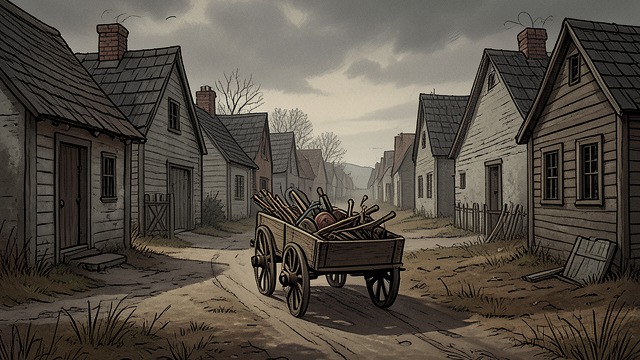
A Shrinking Village
Local livelihoods disappear
Marlott once supported artisans, smallholders, and independent cottagers alongside farm laborers. As holdings fall in, landlords and farmers increasingly reserve cottages for directly employed workers.
A structural loss
The decline of village trades pushes families toward larger towns and weakens local traditions. The Durbeyfields’ difficulties occur within this broader transformation, not simply through individual irresponsibility.
The Annual Hiring Cycle
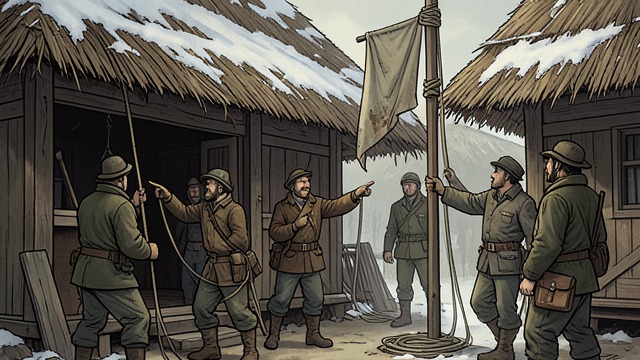
The Annual Hiring Cycle
Workers change farms
At Candlemas Fair, agricultural workers arrange employment for the year ahead. The custom gives workers a moment to seek better positions, but their choices remain constrained by the labor market and the calendar.
Mobility without security
The repeated movement resembles an exchange of one difficult place for another. Tess enters this system as a worker seeking shelter and wages, with few resources to resist an employer’s power.
The Work at Flintcomb-Ash
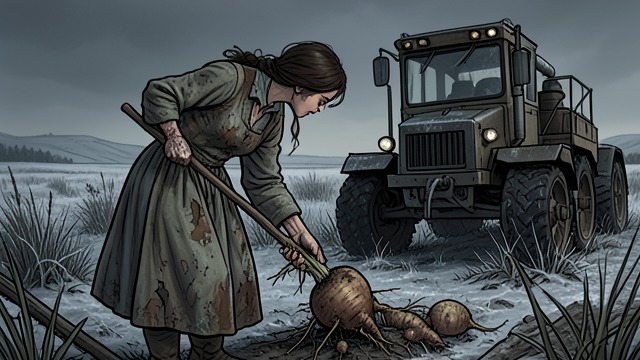
The Work at Flintcomb-Ash
Labor under harsh conditions
At Flintcomb-Ash Farm, Tess works in cold, rain, and snow, first hacking turnips and later drawing reeds and feeding the threshing machine. The agricultural process demands endurance while offering little comfort.
Mechanization and exhaustion
The threshing machine makes the labor faster and more relentless, leaving Tess with little respite. Its efficiency contrasts with the vulnerability of the people whose bodies keep it supplied.
The Eviction Notice
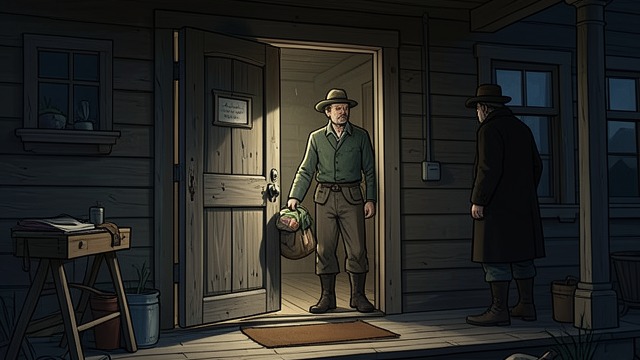
The Eviction Notice
A lease ends
John’s death ends the family’s remaining right to occupy its cottage. The farmer needs the house for a working family, and the Durbeyfields must leave despite their long connection to Marlott.
Morality as pretext
Local judgment of Tess’s past helps make the family’s removal seem socially acceptable. Economic demand and moral stigma combine to turn a private bereavement into homelessness.
A Homeless Arrival
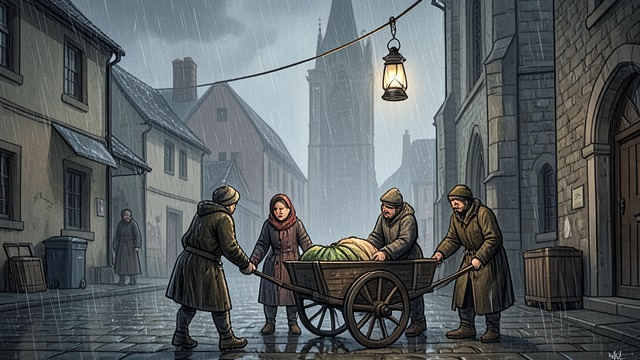
A Homeless Arrival
No place at the destination
The Durbeyfields arrive at Kingsbere to find that the rooms they had arranged are no longer available. They must unload their belongings without having secured shelter.
Displacement made visible
The family settles temporarily beside the church and the ancestral tombs. Their journey reveals the gulf between inherited prestige and the material power needed to obtain a home.
during Tess’s childhood and early adulthood
Candlemas Fair, before Tess takes work at Flintcomb-Ash Farm
the winter before Tess’s return to Marlott
Old Lady-Day, after John’s death
the afternoon of the family’s arrival at Kingsbere
